If you want unusual, local-favourite experiences in Cape Town, start with these hidden beaches, neighbourhoods and walks. This guide pulls together fourteen spots and activities that locals return to again and again, from sunrise tidal swims to sensory-led street art tours, plus timing advice and a booking route for anyone who would rather arrange it all without the legwork.
TL;DR:
- Visit Dalebrook at sunrise or on weekday mornings for calmer water and fewer crowds; prearrange transport, since taxi apps may be unreliable around 5:30 AM.
- At Kalk Bay’s Secret Pool, wear water shoes with soft soles and enter carefully around sea urchins; hidden pools may have no lifeguards.
- Choose Silvermine Gate One for mountain biking and Constantiaberg views, or Gate Two for quieter trails toward Kalk Bay; trailheads may require prearranged transport.
- Private wine tastings, meals hosted in homes, and nightlife at private venues usually require advance arrangements or a local introduction, not public booking.
Table of Contents
- 1. Fourteen hidden experiences across Cape Town
- 2. Timing, transport and safety for off-the-beaten-path spots
- 3. How local concierge insight shaped these picks
- 4. Exclusive and invitation-only experiences worth knowing about
- 5. Hidden wellness spots and secret spas
- 6. Off-the-radar culinary experiences
- 7. Nightlife venues and private party locations locals keep quiet
- 8. Private vineyards and secret wine tastings in the Cape Winelands
- 9. Cultural and historical gems beyond the usual tourist path
- Why the usual Cape Town checklist misses the point
- How we arrange these hidden experiences for you
- FAQ
- Sources
1. Fourteen hidden experiences across Cape Town
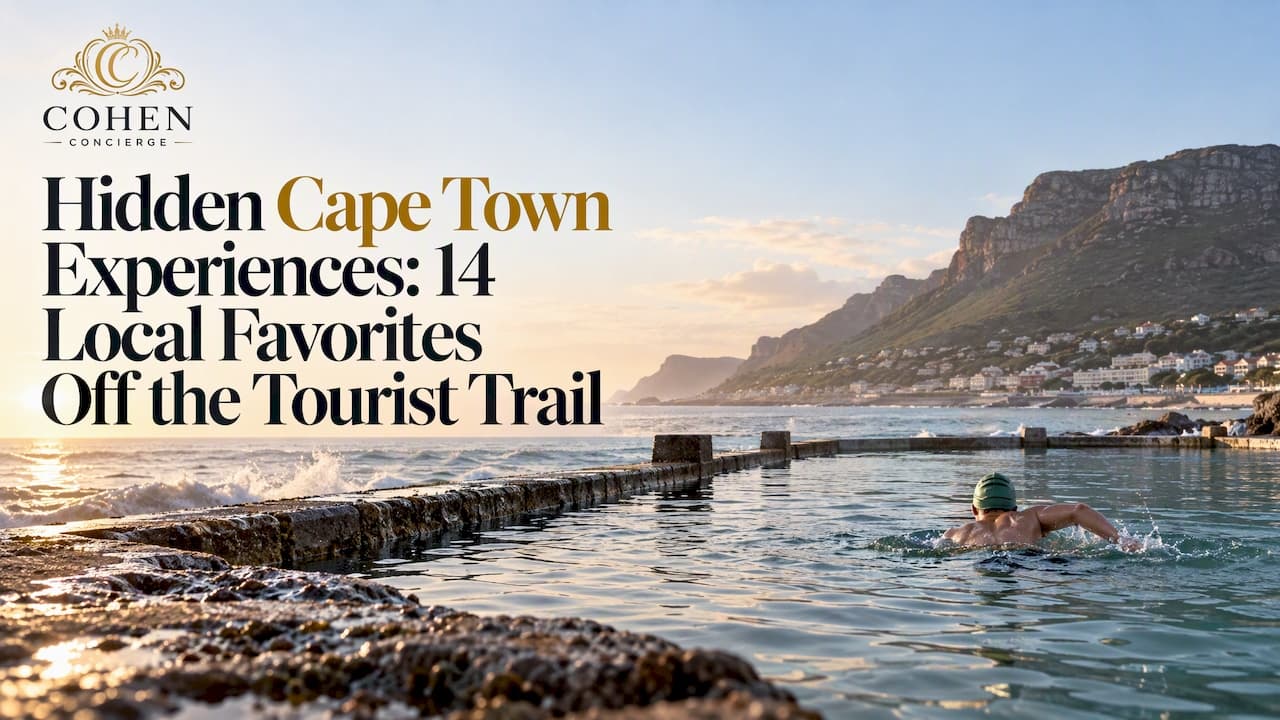
Dalebrook tidal pool sits in a quiet corner of the Kalk Bay coastline and locals treat sunrise as the best time to swim there, since the water is calmer and the pool stays protected from the wind and less crowded in the early morning. Weekday mornings tend to be quietest, which suits anyone who wants a proper swim rather than a squeeze past tourists.
Secret Pool, Kalk Bay is a short walk past Harbour House and feels like a private rock pool, though sea urchins can gather on the rocks, so soft-soled water shoes and a careful entry matter more here than almost anywhere else on this list, according to local itineraries for Kalk Bay.
Graaff's Pool, Sea Point carries a layered coastal history that makes it worth more than a glance. The site has a private access history and continued appeal for timed swims, and the small scale of the pool hides a far more interesting backstory than its size suggests.
Maiden's Cove and the hidden beaches near Camps Bay reward anyone willing to walk a short distance from the main parking areas. Skip the crowded central stretch and the tidal pools and rock ledges just beyond it feel like a different beach entirely.
Soetwater 1 tidal pool, Kommetjie suits families best. It offers picnic and braai areas, an environment centre and safe swimming, so it works well as a half-day stop rather than a quick dip.
Silvermine's quieter trails sit away from Table Mountain's busier front face. The reserve has short walks, a wheelchair-friendly boardwalk, waterfall routes and picnic areas, and the gate you choose changes the walk entirely: Gate One leads to mountain biking routes and views toward Constantiaberg, while Gate Two opens onto quieter circuits heading toward Kalk Bay.
Admiral's Waterfall, Simon's Town is a short scenic trail that locals recommend after rain, when the waterfall actually runs. It pairs naturally with a Kalk Bay or Simon's Town day trip.
Bo-Kaap micro-experiences go beyond photographing the coloured houses. A local cooking class, a stop at the Bo-Kaap Museum or a walk through the neighbourhood's Cape Malay food culture gives far more context than a drive-by visit.
Salt River street art and sensory-led routes show the city from an entirely different angle. Winston Fani, Africa's first qualified blind tour guide, runs street art tours through Salt River using sensory techniques that change how sighted visitors experience the same streets.

Battery Park and Seven Colours Eatery offer a grounded taste of local food culture away from restaurant row, with home-style dishes that reflect the neighbourhood rather than a tourist menu.
Oudekraal Nature Reserve has sheltered beaches and tidal pools tucked between boulders, quieter than nearby Llandudno and better suited to a slow afternoon than a quick stop.
Woodstock's street art corners and independent galleries reward a slow wander. The murals shift block by block, and several small galleries nearby showcase local artists outside the main gallery circuit.
Small museums and community projects, such as township-based heritage initiatives in Khayelitsha, offer a grounded alternative to the city centre's larger museums and often operate as community-run spaces.
Hidden rooftop and boutique bar vantage points scattered through the City Bowl give sweeping views without the queues of the better-known rooftop bars, often inside buildings that give no hint from the street of what is on top.
2. Timing, transport and safety for off-the-beaten-path spots
Getting the timing right matters more at hidden spots than at the city's main attractions, since there is no infrastructure to smooth over a bad arrival time.
- Visit tidal pools like Dalebrook at sunrise or on weekday mornings, when conditions are calmer and crowds are thinnest, as local guides for Kalk Bay confirm.
- Arrange a pre-booked transfer or private chauffeur for remote spots such as Oudekraal or the Silvermine trailheads, where public transport options are limited.
- Carry water, sun protection and soft-soled water shoes, since sea urchins are common at rock pools like the Secret Pool in Kalk Bay.
- Expect few or no lifeguards at hidden beaches and tidal pools, so swim with a companion and check conditions before entering.
- Ask before photographing people or stalls in neighbourhoods like Bo-Kaap, where daily life continues around the sightseeing.
- Consider a sensory-led tour, such as the Salt River routes run by Winston Fani, for an inclusive way to experience the city regardless of ability.
Pro Tip: Book transport in advance for sunrise tidal pool visits. Arriving by taxi app at 5:30am along the coast is unreliable, and a pre-arranged driver removes the uncertainty entirely.
3. How local concierge insight shaped these picks
Jordan writes about Cape Town from inside the Cohen Concierge network, where bespoke planning depends on knowing which gate at Silvermine leads to the quiet trail and which Kalk Bay rock pool actually needs water shoes. These picks reflect that kind of ground-level detail rather than a generic highlights list.
Arranging access to fragile or lesser-known sites, timed tidal swims, a sensory-led street art tour, a Bo-Kaap cooking class, works best with local partners who understand tides, opening hours and neighbourhood etiquette. That network, built over repeated bookings across the city, is what turns a list of hidden spots into a visit that actually goes smoothly.
4. Exclusive and invitation-only experiences worth knowing about
Some of Cape Town's best experiences never appear on a public events calendar. Private art walkthroughs, small supper clubs and invitation-only wine launches circulate through word of mouth and personal networks rather than ticketing sites, which is precisely why visitors rarely stumble onto them on their own.
Access to these events usually depends on a relationship with the host, gallery or winery rather than a booking button. Locals hear about them through friends, neighbours or professional networks built over years in the city. For a short visit, the realistic route in is through a contact who already has that relationship and can request an invitation on your behalf, arranging introductions rather than simply handing over a schedule.
5. Hidden wellness spots and secret spas
Cape Town's wellness scene extends well past the well-known hotel spas. Smaller studios tucked into converted houses in Vredehoek or Tamboerskloof offer treatments with a more personal feel, often run by a single therapist with a loyal local clientele rather than a walk-in desk.
Villa-based wellness is another route locals favour, particularly for groups: a masseuse or yoga instructor who comes to a private home or villa rather than the other way round. This suits travellers staying in self-catering accommodation who want a spa morning without leaving the property, and it tends to work best when booked a few days ahead rather than on the day.
6. Off-the-radar culinary experiences
Chef's tables and home-hosted meals give a far more personal view of Cape Town's food culture than a standard restaurant booking. A private chef cooking in a villa kitchen, working through a seasonal menu built around what is fresh at the local fish market or farm stall that week, turns dinner into the main event of the evening rather than a stop before it.

Home-hosted meals in neighbourhoods such as Bo-Kaap or Woodstock offer a similar depth, with a local cook preparing a traditional meal for a small group in a family setting. These experiences rarely appear on booking platforms and usually need a direct introduction to the host, which is where local contacts make the difference between an idea and an actual seat at the table.
7. Nightlife venues and private party locations locals keep quiet
Cape Town's most interesting nightlife rarely happens behind a visible door. A handful of bars and small clubs operate without signage, identifiable only by a queue or a tucked-away entrance that regulars already know. Private party venues, rooftop terraces and members-style spaces follow the same pattern: access comes through knowing someone, not through a public listing.
For visitors, the practical route into this scene is a local contact who already knows which door to knock on and which nights are worth the trip. Reaching these spots safely late at night also means sorting transport in advance, since many sit outside the main nightlife strips.
8. Private vineyards and secret wine tastings in the Cape Winelands
Beyond the well-signposted estates along the main Stellenbosch and Franschhoek routes, a number of smaller, family-run vineyards in the Cape Winelands pour tastings by appointment only, with no tasting room open to passing visitors. Getting in usually means a direct call or a personal introduction rather than turning up at the gate.

Some estates also offer private barrel tastings or small-group sessions with the winemaker, set apart from the standard tasting menu. These sessions depend on timing around the estate's own schedule, which makes advance planning far more useful here than at the larger, tourist-facing wineries. A day built around two or three smaller producers, rather than a long list of famous names, tends to leave a stronger impression.
9. Cultural and historical gems beyond the usual tourist path
Cape Town's history runs deeper than the Castle of Good Hope and Robben Island. Smaller community museums and heritage projects, including initiatives in Khayelitsha, document local history through the people who lived it, offering a grounded counterpart to the city centre's larger institutions.
Walking tours through Salt River's street art scene add another layer, connecting contemporary murals to the area's working-class history. The sensory-led tours run by Winston Fani fold straight into this theme, since they treat the streets themselves as a historical text rather than a backdrop for photographs. These smaller, community-rooted experiences tend to say more about the city than its biggest landmarks do.
Why the usual Cape Town checklist misses the point
Most Cape Town guides repeat the same six or seven landmarks and call the job done. That approach rewards efficiency over curiosity, and it misses the texture that actually makes a visit memorable: a sunrise swim before the crowds, a neighbourhood meal cooked in someone's home, a trail that nobody else is walking.
The conventional advice also treats timing as an afterthought, when in practice it is the difference between a pleasant hidden spot and a disappointing one. A tidal pool at midday with wind and crowds is a different place entirely from the same pool at sunrise.
If there is one thing worth prioritising, it is sequencing: build a visit around early starts for the coast and water, then shift to neighbourhood and cultural experiences later in the day. Chase the famous six wonders if time allows, but treat them as a bonus rather than the main event.
— Jordan
How we arrange these hidden experiences for you
We know which gate to use at Silvermine, which rock pool needs water shoes, and which host will open their kitchen for dinner. Booking any of the spots on this list through our service means skipping the research and the uncertainty that usually comes with finding them yourself.

We arrange:
- Private transfers to tidal pools, trailheads and other spots with limited public transport.
- Bespoke experiences, from sensory-led street art tours to Cape Winelands days built around smaller producers.
- Dining reservations and nightlife access, including introductions to venues that do not take public bookings.
- Private chefs and villa-based wellness sessions for groups staying in self-catering accommodation.
Our approach relies on a discreet, rapid response and a network of local partners, enabling swift arrangements that can secure a sunrise swim or a vineyard appointment within the same week. Get in touch through our Cape Town concierge services page to start planning a visit built around what locals actually do.
FAQ
What do locals do in Cape Town?
Locals favour quiet, low-cost routines over the main tourist circuit: sunrise swims at tidal pools such as Dalebrook, weekend walks on quieter Silvermine trails, and neighbourhood food stops in areas like Bo-Kaap or Salt River. Many of these habits revolve around timing, especially early mornings, to avoid crowds and catch calmer conditions.
Where to go out at night in Cape Town?
Beyond the well-known bar strips, much of Cape Town's nightlife happens in small, unsigned venues and private party spaces that locals find through word of mouth rather than listings. Arranging transport in advance is worth doing, since several of these spots sit outside the main nightlife areas.
How to find friends in Cape Town?
Shared activities tend to work better than searching directly: joining a local walking group, a sensory-led tour, or a neighbourhood cooking class creates natural opportunities to meet people with similar interests. Smaller, community-run experiences, such as those in Bo-Kaap or Salt River, often lead to conversations that a standard tour does not.
What are the six wonders of Cape Town?
Definitions vary depending on the source, but the phrase generally refers to Cape Town's most recognised natural and historic landmarks, such as Table Mountain, Robben Island and the Cape of Good Hope. For a fuller picture of the city, pairing one or two of these with the hidden spots in this guide tends to give a more rounded visit.
Sources
- Your neighbourhood guide to Kalk Bay — Cape Town Tourism
- Silvermine – Table Mountain National Park – SANParks
- Graaff's Pool: Sea Point bathing spot with a secret history — CapeTownEtc