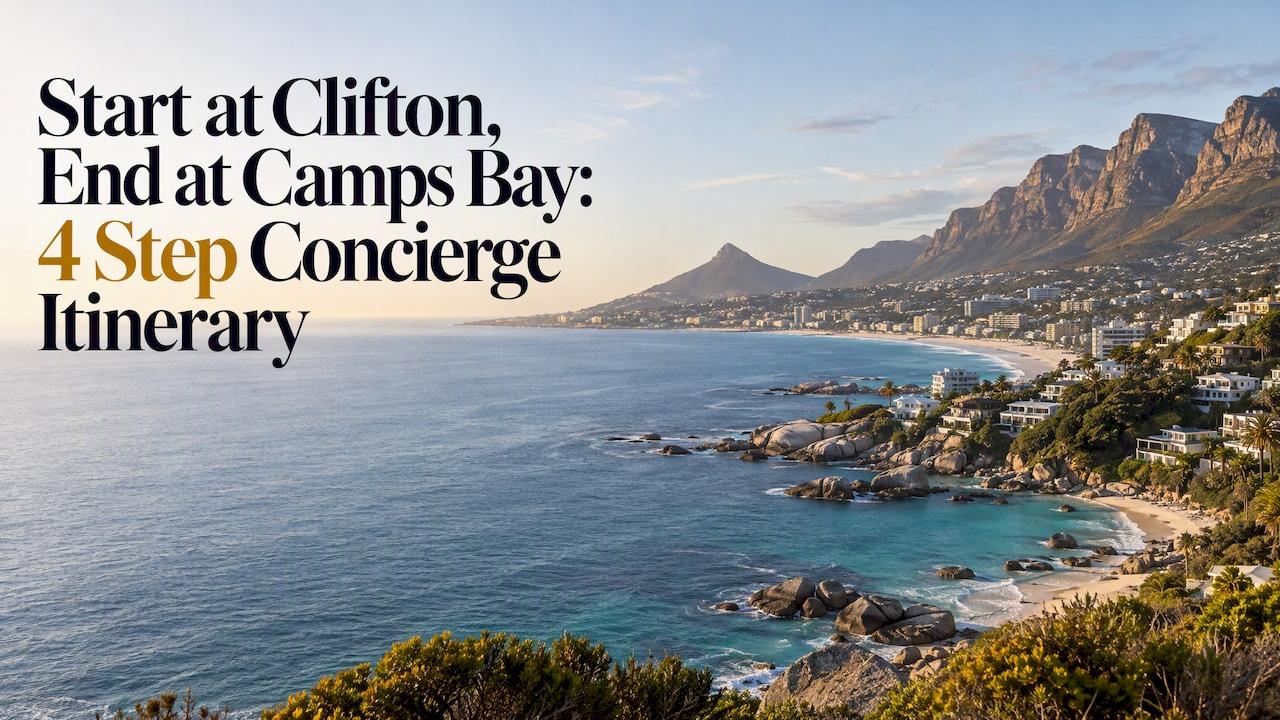
Choose Camps Bay for the restaurants, sunset crowds and easy promenade access; choose Clifton for sheltered, picture-perfect coves and more privacy. Both sit on the Atlantic Seaboard, share the same cold water, and are close enough that you can reasonably visit both in a single afternoon rather than agonising over which one to pick.
TL;DR:
- Atlantic water stays around 12–16 degrees Celsius year round, so bring a wetsuit or rash vest for longer swims and plan swimming earlier.
- Clifton Fourth has seasonal lifeguards, toilets, rentals, and 2025/26 Blue Flag status; the other coves have fewer facilities and steep access steps.
- Visit Clifton in the morning for calmer conditions, then walk 15 to 20 minutes to Camps Bay for lunch, its tidal pool, and sunset dining.
- Parking fills quickly at both beaches, especially in summer; Clifton’s steep staircases also make Camps Bay easier for prams and visitors with limited mobility.
- When a strong south easter is forecast, use Clifton’s sheltered coves; on calmer days, Camps Bay’s open views and promenade dining suit a longer stay.
Table of Contents
- Camps Bay: promenade, atmosphere and what to expect
- Clifton: the four coves, shelter and quieter beach moods
- Water temperature and the wind: what to pack and when to swim
- Facilities, safety and access: parking, lifeguards, rentals and Blue Flag status
- A sensible day plan: how to visit both, timing and practical route options
- Suitability for families vs adults/partygoers
- Best times of year to visit each beach in terms of weather and crowds
- Local perspective from a Cape Town concierge: making the day seamless
- How Cohen Concierge can simplify a Camps Bay-Clifton day
- FAQ
- Sources
Camps Bay: promenade, atmosphere and what to expect
Camps Bay is one long, wide stretch of white sand fronting Victoria Road, with the Twelve Apostles mountain range rising behind it and a dense strip of restaurants, bars and hotels running the length of the beach. It is Cape Town's most recognisable beach scene, and it earns that reputation through sheer convenience: you can walk off the sand straight into a café for a cold drink without getting back in a car.

This beach suits a particular kind of traveller. Social visitors who want to combine a swim with lunch, photographers chasing a golden-hour shot over the Atlantic, and families who value having toilets, shops and restaurants within a short walk all do well here. The promenade setting keeps everything close, which matters when you have children or simply do not want to plan logistics around a beach day.
The trade-off is crowding. Parking along Victoria Road gets tight by mid-morning in summer, and the sunset hour draws a thick crowd onto the sand and the promenade benches alike. A tidal pool near the beach gives families a calmer alternative to the open Atlantic for younger children, which is worth knowing if the main stretch feels too exposed or lively for toddlers.
Wind is the other variable. When Cape Town's south-easter picks up, Camps Bay sits exposed to it, and the open beach can turn uncomfortable with blowing sand and a stiffer backwash at the water's edge.
- Wide, single beach with restaurants and hotels directly on the sand.
- Best for social visitors, sunset photographers and families wanting nearby facilities.
- A tidal pool offers a sheltered swimming option for children.
- Parking and crowds peak around sunset in summer.
Pro Tip: If you want a sunset table on the promenade, book ahead rather than arriving and hoping for a walk-in seat.
Clifton: the four coves, shelter and quieter beach moods
Clifton is not one beach but four, numbered First to Fourth and tucked into separate coves along a rocky headland just south of Camps Bay. Each one has its own character without being a different destination entirely: Clifton's layout means you can walk between coves along the rocks if you want to compare the mood of each before settling.
First and Second beaches tend to draw a younger, more social crowd and are popular with photographers for the granite boulders that frame the water. Third beach has a slightly quieter, laid-back feel, while Fourth beach, the largest and most developed of the four, tends to suit families best because it has the most consistent facilities and lifeguard cover.
Getting down to any of the coves means descending steep public staircases from Victoria Road, and parking along that road is limited, especially in peak season. Arriving early or using a drop-off rather than circling for a bay saves real frustration.
Facilities are uneven across the four beaches. Clifton Fourth held Blue Flag status for the 2025/26 season, with seasonal lifeguards, public toilets and umbrella and chair rentals. First, Second and Third have far fewer permanent amenities, so what you bring is largely what you have for the day.
The payoff for the steps and sparse facilities is shelter. Clifton's headland and granite boulders block much of the south-easter that makes Camps Bay uncomfortable on windy afternoons, so it often stays calm and picnic-friendly when the main beach does not.
- Four distinct coves, First to Fourth, each with a slightly different crowd.
- Steep steps and limited parking mean early arrival or a drop-off works best.
- Clifton Fourth carries Blue Flag status with lifeguards and rentals available; the other three have minimal facilities.
- Headland and boulders shelter the coves from the south-easter.
Pro Tip: Head to Fourth beach if you want facilities and lifeguards; pick First to Third if you are happy to be self-sufficient for shade and shelter.
Water temperature and the wind: what to pack and when to swim
Neither beach is warm. Atlantic Seaboard water, including at Camps Bay and Clifton, sits at roughly 12 to 16 degrees Celsius year-round, far colder than the 18 to 22 degrees you would find at False Bay beaches in summer. That single fact shapes most of the practical decisions for a beach day on this side of the peninsula.
The other major factor is Cape Town's south-easterly wind, often called the Cape Doctor. It builds through summer afternoons and hits Camps Bay's open stretch directly, while Clifton's headland and boulders create a wind shadow that keeps the coves noticeably calmer.
The Atlantic Seaboard's water rarely climbs above 16 degrees Celsius, which is cold enough that most visitors treat a swim as a bracing dip rather than a long session.
- Pack a wetsuit or rash vest if you plan more than a quick dip.
- Morning tends to be calmer and less windy than late afternoon.
- Seasonal lifeguards are on duty at the main patrolled beaches, not every cove.
- Treat rip currents and sudden swell with caution, particularly away from lifeguard flags.
Facilities, safety and access: parking, lifeguards, rentals and Blue Flag status
Blue Flag status is an international mark awarded to beaches that meet set standards for water quality, safety and facilities. Clifton Fourth carries that status for the 2025/26 season, with seasonal lifeguards, public toilets and umbrella or chair hire on site. Camps Bay does not carry the same designation but makes up for it with a far more continuous strip of restaurants, shops and facilities running the length of the promenade, which suits families who want everything within a short walk.
Parking is the recurring headache at both. Clifton's roadside spaces fill quickly, and Camps Bay's demand is just as intense around sunset. A practical workaround many visitors use is a private chauffeur or Uber timed to arrive and collect outside the busiest windows, which avoids circling for a bay altogether.
- Blue Flag status (Clifton Fourth) signals vetted water quality and on-site safety standards.
- Camps Bay offers denser restaurant and shopping access along its promenade.
- Timed private transport sidesteps peak parking pressure at both beaches.
- Clifton's steps make it harder going for anyone with limited mobility; Camps Bay's flat promenade access is easier.
A sensible day plan: how to visit both, timing and practical route options
The two beaches sit close enough that choosing one over the other is rarely necessary. A short drive of around three minutes, or a 15 to 20 minute walk, connects them, so a single day can comfortably cover both.
- Start at Clifton in the morning, when the wind is usually lighter and the coves are at their calmest for swimming or reading on the sand.
- Move to Camps Bay by early afternoon for lunch on the promenade and the tidal pool if you have children along.
- Stay at Camps Bay into early evening to catch the sunset crowd and a restaurant table booked in advance.
- If the south-easter is forecast for the afternoon, reverse the order and keep your sheltered time at Clifton for later in the day.
Bring a towel, cash for umbrella or chair rental, and keep valuables out of sight on the sand rather than left unattended in a bag.
Pro Tip: Book a timed pickup rather than a fixed return time. A flexible collection window means you are not rushing off the beach to beat a parking meter or a traffic surge.
Suitability for families vs adults/partygoers
Families generally do better at Camps Bay or Clifton Fourth. Both offer nearby toilets, lifeguards in season and either a tidal pool or gentler cove conditions that make supervising younger children easier. The flat promenade access at Camps Bay also means prams and beach gear do not need to be carried down a staircase.
Clifton's First and Second beaches, by contrast, tend to draw a younger, more social crowd drawn by the rock formations and a livelier atmosphere, without the same concentration of facilities. Adults looking for a quieter, more private stretch of sand away from Camps Bay's restaurant buzz often prefer Third beach, which keeps a laid-back feel without the social scene of First and Second.

Neither beach runs an organised nightlife scene directly on the sand. Camps Bay's evening energy comes from its promenade bars and restaurants rather than the beach itself, so partygoers are really choosing a neighbourhood to base themselves in rather than a specific stretch of sand.
Best times of year to visit each beach in terms of weather and crowds
Cape Town's summer months bring the warmest air temperatures and the heaviest crowds to both beaches, along with the strongest and most frequent south-easter winds. That combination makes Clifton's sheltered coves particularly valuable during peak season, while Camps Bay's open stretch can feel overcrowded and windy on the same afternoon.
Shoulder months, typically either side of the main summer rush, tend to bring lighter crowds and gentler wind patterns at both beaches, with air still mild enough for a comfortable day on the sand even if the water stays cold year-round. Midweek visits at any time of year reduce the parking pressure that builds at both beaches on weekends.
If the forecast shows a strong south-easter, Clifton is the safer bet for comfort. On calm, low-wind days, Camps Bay's open views and promenade dining make it the more rewarding choice for a longer stay.
Local perspective from a Cape Town concierge: making the day seamless
Most of the friction in a Clifton and Camps Bay day is logistics, not the beaches themselves. Knowing which Clifton parking strip fills first, which Camps Bay restaurant takes a same-day sunset booking and when to time a pickup so nobody waits around in the wind makes the difference between a relaxed outing and a rushed one. Small, local decisions like these, arranged ahead of time, change how the day actually feels.
— Jordan
How Cohen Concierge can simplify a Camps Bay-Clifton day
We arrange the logistics around this kind of day so you are not the one circling for parking or waiting on a restaurant to answer the phone. Our private chauffeur and transfer service handles timed pickups between Clifton and Camps Bay, our restaurant reservations service secures a sunset table on the promenade, and our bespoke experience planning can build the whole outing, umbrellas, timing and extras included, around your preferences.

- Private chauffeur transfers timed to avoid Clifton and Camps Bay parking pressure.
- Restaurant reservations secured ahead of the sunset rush.
- Bespoke day planning covering both beaches, shade, towels and timing.
Get in touch through Cohen Concierge to arrange a day built around the beach, the weather and your own pace.
FAQ
Is Camps Bay better than Clifton?
Neither beach is objectively better: Camps Bay suits visitors who want restaurants, sunset crowds and easy promenade access, while Clifton suits those wanting sheltered, quieter coves and more privacy. The right choice depends on whether you prioritise social atmosphere or calm, picture-perfect scenery.
Is Clifton more expensive than Camps Bay?
Neither beach itself charges an entry fee, so cost differences come down to where you eat, park or stay rather than the sand. Camps Bay has far more accommodation and dining options directly on site, which can make it the more convenient and often more practical base for a stay.
What is the nicest beach in South Africa?
There is no single official answer, since "nicest" depends on what a visitor wants from a beach. Clifton and Camps Bay are consistently ranked among Cape Town's most scenic options, with Clifton known for its sheltered coves and Camps Bay for its mountain backdrop and promenade atmosphere.
What is Clifton Beach famous for?
Clifton is known for its four distinct coves, First to Fourth, tucked among granite boulders and sheltered from Cape Town's south-easterly wind. Clifton Fourth carries Blue Flag status, with seasonal lifeguards and facilities that make it the most family-friendly of the four.
Sources
- Cape Town beaches: Camps Bay, Clifton, Llandudno, Muizenberg and Boulders
- Cape Town's eight beaches earn Blue Flag status for 2025/26
- Compare: Camps Bay vs Clifton